FREE SHIPPING on ALL Orders Over $999

What Happens When an AED Expires? Recycling and Disposal Best
What Happens When an AED Expires? Recycling and Disposal Best Practices
Automated External Defibrillators (AEDs) save lives, but like all electronic medical devices, they eventually expire. Knowing what to do when your AED reaches the end of its service life is critical. AED One-Stop Shop provides a FREE AED recycling program designed to make disposal safe, environmentally responsible, and simple. Participating in AED recycling ensures that your expired AEDs, batteries, and accessories are handled properly, protecting both the environment and your community.
Why Proper AED Recycling Is Important
Expired AEDs contain lithium batteries and electronic components that can be hazardous if not disposed of correctly. Improper disposal may lead to toxic chemical leaks or fire hazards, and accessories like pads, cables, and plastic housings do not decompose safely in landfills. By choosing AED recycling, organizations reduce environmental risks, stay compliant with disposal regulations, and demonstrate social responsibility. Proper AED recycling ensures that expired devices are managed safely and sustainably.
How AED One-Stop Shop Makes Recycling Easy
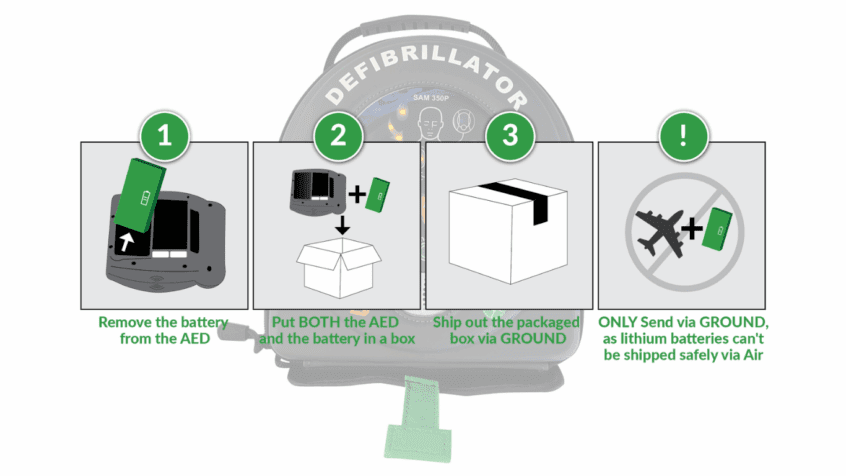
AED One-Stop Shop’s Free AED recycling program accepts most major AED brands, including LIFEPAK, ZOLL, Philips HeartStart, Defibtech Lifeline, Cardiac Science Powerheart, and others. Customers ship their expired AED units, carrying cases, and batteries using ground transportation. Pads, manuals, and other nonessential accessories are often excluded to reduce shipping weight. All recycling and processing costs are covered by AED One-Stop Shop. This approach simplifies AED recycling for organizations of all sizes, ensuring compliance and environmental safety.
Step-by-Step Process for AED Recycling

Participating in AED recycling is straightforward. First, complete the online form and agree to program terms. AED One-Stop Shop then provides instructions and a shipping address. Lithium batteries must be removed from the AED and individually packaged using plastic bags, foam, or bubble wrap to prevent short circuits during transit. Each shipment requires the official lithium battery return label. Following these instructions ensures safe transport and compliance with all regulations. With this process, AED recycling becomes a manageable and responsible solution for expired devices.
Environmental and Community Benefits of AED Recycling
AED recycling is more than proper disposal—it also supports sustainability and community health. AED One-Stop Shop partners with donation programs to repurpose functioning AEDs for schools, nonprofits, and underserved communities. Units that cannot be reused are broken down and recycled appropriately, reducing landfill waste. Participating in AED recycling helps organizations demonstrate environmental stewardship and supports a circular system for life-saving medical devices.
Start Your AED Recycling Today
When your AED expires, proper disposal is essential. AED One-Stop Shop provides a simple, secure, and environmentally responsible way to manage expired devices through its FREE AED recycling program. By following the program guidelines, you ensure your expired AEDs, batteries, and cases are safely processed while supporting community health. Contact AED One-Stop Shop at 1-855-677-2337 or visit our website to begin your AED recycling process and responsibly dispose of your expired AEDs today.
Take Action and Buy a Defibrillator Online Today
A defibrillator can save a life in moments when every second counts. When you’re ready to buy a defibrillator online, trust AED One-Stop Shop for quality, support, and professional guidance. Explore our bundles, take the Buyer’s Guide questionnaire, and speak with an expert to ensure you make the right choice. Now is the perfect time to buy a defibrillator online for your home, business, or community. Call 1-855-677-2337 or visit our website to buy a defibrillator online and safeguard your loved ones or team with a trusted AED.